
BOOST YOUR IMMUNE SYSTEM
SUPREME HONEYBEE POLLEN
High-quality pollen is sourced from U.S. bees

PRODUCT DETAILS
Our high-quality pollen is sourced from U.S. bees. Many bee pollen supplements and products sold in the world and US come from China. Most of these pollens (often made in batches and stored) have actually been found to be contaminated with outside pollutants. The company we source our pollen from takes pride in their pure bee pollen and guarantees no off-shore fillers and/or ingredients in their product. The bee pollen is collected from a pristine environment in rural farmland areas without any contaminants and no industrial factories nearby.
Our pollen is never processed or heated in order to maintain all vital nutrient qualities of antioxidants, protein, enzymes, vitamins, and amino acids. Our pollen is fresh and is best kept refrigerated after opening. We keep our bee pollen raw and natural the way nature intended. When you purchase our bee pollen, it comes straight from the hive. All of our bee pollen is gathered using special “pollen traps” and bottled right at the hive by our beekeepers.
Honey Bee Pollen FAQ
Raw means the bee pollen has not been pasteurized. The pasteurization process would heat the bee pollen and destroy many of the nutritional compounds that can support the immune system.
Wildcrafted focuses on what the bees have access to for food. With wildcrafting, the bees are not being kept near commercial crops. Instead, they have access to the area’s natural environment, which generally leads to a broader nutritional base for the bees and bee pollen.
Bees are foragers who range up to five miles from their hive, which makes it almost impossible for a beekeeper to verify that everything the bees come into contact with is organic. However, we source our bee pollen from hives that are:
- Remote (away from industrial farming)
- Rural (not near cities and associated pollution)
Deca Aloe maintains partnerships with remote, rural beekeepers, some of whom also supply the raw honey for Aloe Arborescens Supreme Immune Health Formula. These beekeepers use special traps to collect pollen without harming the bees.
Beekeepers are very careful to collect bee pollen in small amounts using bee pollen traps. Bees consume bee pollen, so beekeepers find a balance between harvest and hive health. All bee pollen is packaged at the collection site for maximum freshness.
Once introduced to the diet, people usually consume bee pollen daily. Many people take it in the morning because they feel a burst of energy. Bee pollen can be eaten on any cold or room-temperature food, but should not be heated.
Doctors may instruct those taking bee pollen as a medical food to take it on a different schedule.
Bee pollen is measured in teaspoons for adults. One teaspoon per day is a good serving size. However, experts recommend starting at a few granules while introducing honey bee pollen as a supplement.
Doctors may recommend a different serving size while using bee pollen as a medical food.
STUDIES HAVE FOUND THAT HONEYBEE POLLEN CAN HELP:
LEARN MORE ABOUT THIS AMAZING SUPERFOOD
WHAT IS BEE POLLEN?
Bee pollen is made from the male seed of flowers and other seeded plants. As bees fly from flower to flower they gather the pollen and mix it with nectar brought from the hive or secretions from their salivary glands to create a pollen mixture. This pollen mixture is then stored on the bees legs for transport back to the hive. And just as bees make excess honey (enough for us to harvest) they also collect excess pollen. Upon entering the hive some of this pollen is gently scraped off and collected by special pollen traps set up by the beekeeper. If done properly, a beekeeper should be able to collect pollen without harming the bees or the colony. Beekeepers need to be careful to collect only a small amount of the pollen the bee bring in, so as not to deprive the bees of this food source.
Bee pollen is known as an apitherapeutic product because it contains groups of chemical compounds that are made by bees and used for medicinal purposes. It is considered one of nature’s most completely nourishing foods because it contains nearly all nutrients required by humans. The percentage of rejuvenating elements in bee pollen remarkably exceeds those present in brewer’s yeast and wheat germ. It is richer in proteins than any animal source. It contains more amino acids than beef, eggs, or cheese of equal weight.


KEY HEALTH BENEFITS
PRODUCT LABEL AND SUPPLEMENT FACTS
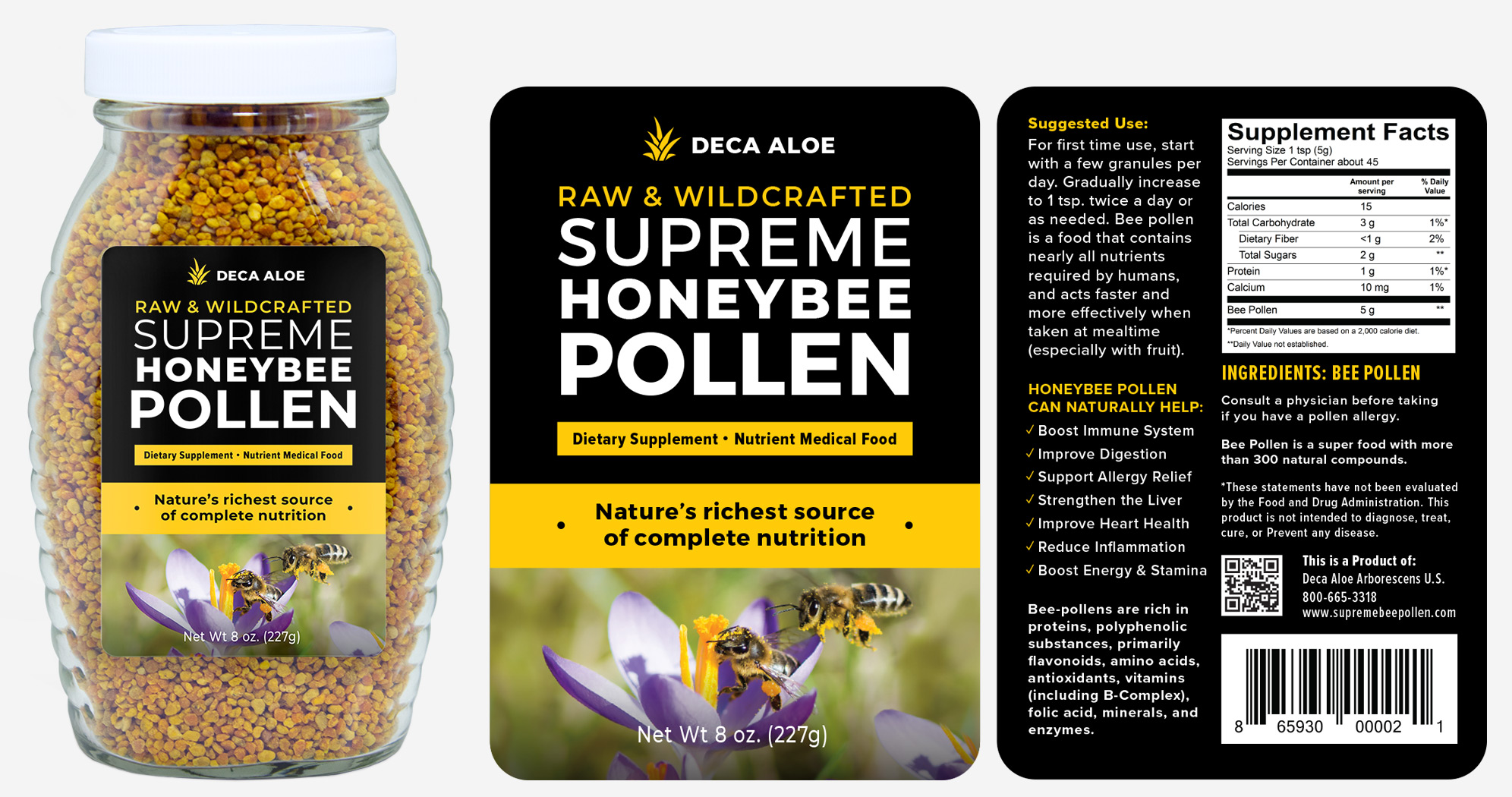
Click image to view larger

